

In February 2022, Ukraine was invaded by its powerful neighbor. Since then, the whole world has been witnessing with horror and sadness the struggle of the Ukrainian people to protect their lives, land, culture, and identity.
In this article, I invite you to meet the leader of TFP-Ukraine, Oleksii Lemeshchuk. With his openness, wit, and generosity, he helps us understand his people and reflect on the challenges of applying TFP in a country at war.
Meeting Oleksii and his people
My first contact with Oleksii was through an email I sent him during the holidays. I decided to contact him when I discovered, through the warm holiday wishes that many of you sent, that we had a Ukrainian TFP group in our society. It seemed to me that they would have a unique perspective on human nature and on the application of transference focused psychotherapy in a difficult context.
He answered quickly and showed enthusiasm for the project. We arranged a zoom meeting with an interpreter so that communication of his ideas would not be limited by language.
On the given day, I connected with Oleksii and his interpreter and was pleasantly surprised by the brightness of his office. Looking back, I wonder if I was expecting darkness and despair. The short time I spent with Oleksii showed me light and hope for a better future.
Perhaps that resilience comes from spending his childhood in a communist country. Oleksii remembers how it was dangerous to exist outside of Marx and Lenin’s thinking:
That was the time when everybody had to be obedient and do what is told.
Olexeii Lemeshchuk, Leader of TFP-Ukraine
Because of that, having personal discussions to talk about one’s problems was not allowed. Original thinking that could foster a deep understanding of oneself was considered dangerous. You could be arrested or killed for thinking the wrong things. Furthermore, since psychiatric facilities were used to enforce control of dissidents who would not comply with the policies of the communist party, seeking help would make you suspicious to neighbors and friends. That is why many people turned to drugs and alcohol as the only means of relief from their suffering.
Despite the context, Oleksii’s independent thinking led him to be interested in people’s emotions and behaviors. Unfortunately, the political context did not permit the study of psychology until the dissolution of the Soviet Union in 1991. This led to more freedom of thought and action and gradually paved the way for him to undergo different psychology studies. But it was really in 2010 that psychology became very popular in Ukraine.
Before the war
Oleksii has been a clinical psychologist for 15 years. Although the study and practice of psychology have developed rapidly since 2010, the public system in Ukraine does not offer psychotherapy services. As a result, psychologists like Oleksii work in private offices, and patients pay for their own treatment since there is no insurance for psychological services. Those who cannot afford psychotherapy are treated with medication in the state psychiatric system. Although Ukrainian society has seen significant positive changes, it is still difficult for older people to seek help. Fortunately, the younger generation is more emotionally open and does not see seeking psychological help as a big problem.
Oleksii’s first contact with TFP was through his teachers who used Kernberg and Kohut to talk about narcissism. He immediately fell in love with Kernberg’s theories, which he found very reasonable. At that time, he never dreamed he would be able to attend seminars with him. Starting in 2015, he attended all of his seminars that took place in Ukraine and Russia.
It was finally in 2017 that he joined a Russian TFP study program under the direction of Frank Yeomans. Out of the 400 people who completed the course, 15 were from Ukraine. He was one of the 5 participants who joined a regular supervision group composed of Russians and Ukrainians.
While he was studying TFP, he fostered the project to start a TFP group in Ukraine, but he always postponed its inception because he was waiting for certification.
Then the war began.
Being a TFP therapist in wartime
The first impact of the war was felt by Oleksii’s supervision group on the evening of February 24, 2022. Earlier that day, Russia had invaded Ukrainian territory. The group consisted of three Ukrainian and three Russian supervisees, as well as several Russian observers and a supervisor from the USA. That evening, the Ukrainians were supposed to present cases, but they were too overwhelmed by the shock and frustration of what was happening. They felt the danger of splitting and falling into a black and white vision of the situation. However, Monica Carsky, the group supervisor, and the Russian colleagues present showed tremendous support, with some of them crying, appalled by what was happening.
Oleksii emphasized the importance of these spontaneous reactions from their Russian counterparts, as they had a profound emotional impact on him. It helped them maintain a nuanced view of the world, where not all Russians are bad and not all Ukrainians are good. The experience highlights how external reality has a great influence on the capacity to maintain technical neutrality. It shows us how important it is for TFP therapists to cultivate this stance in their personal life by surrounding themselves with people who support it. It also highlights how a supervision group can serve as an emotional support group and treating colleagues with honesty and compassion matters.
According to Oleksii, the group led by supervisor Monica Carsky has become essential to each of its participants. Recently, the group discussed the significance of their collective experience. For Oleksii, it represents the idea that psychological well-being, love, and friendship can help individuals overcome even the most challenging times. It’s not surprising that this group, composed of both Ukrainians and Russians, continues to meet regularly.
However, the emotional strain can sometimes be too much. Oleksii and other Ukrainian TFP therapists had a hard time continuing to develop within the Russian TFP community while Putin’s regime continued to bomb Ukrainian cities and kill Ukrainians.
Oleksii had to quickly develop a project of founding a TFP group in Ukraine. TFP-Ukraine is made up of 14 members, with four in Odessa, three in Kiev, two in Kharkov, one in Dnipro, and one in Lugansk. Three have left the country. The situation in Kharkov is the worst, as the city is located 50 km from the Russian border and experiences shelling and artillery fires every day. Dnipro is also in a tough situation as it is a city closer to the front line and is quite often shelled. Odessa, where Oleksii lives, is now 200 km from the front lines.
Despite the war, TFP-Ukraine was able to arrange for over 200 Ukrainian therapists to participate in a seminar on personality disorders by Dr. Kernberg and to conduct a seminar with Dr. Kernberg on narcissistic disorder. They also have further plans to develop TFP in the country. For many people, it might be a bit surreal to study in a time of war, but that is the Ukrainian reality – war is not a hindrance to life.
Wartime TFP
Even in a relatively safe city, events happening anywhere in the country can have a profound impact on all citizens. For example, when a missile hits a residential building in cities like Dnipro, Kharkov, or even Odessa, people throughout the country share in feelings of sadness and anger. Despite the destruction caused by the ongoing conflict, the people of Kharkov and other affected cities demonstrate remarkable resilience and work tirelessly to rebuild after each attack.
I asked Oleksii about his experience working with patients during this challenging time. He explained that at the beginning of the war, many patients sought help for emotional trauma, which prompted Ukraine’s psychotherapists to volunteer to form a few crisis centers that continue to work.
However, as the conflict persisted, patients began seeking help for long-lasting emotional difficulties that had been exacerbated by the ongoing conflict. Interestingly, some patients who had previously been reluctant to engage in psychotherapy were now motivated to address longstanding issues.
Before our interview, I had wondered how challenging it must be for a TFP therapist practicing in Ukraine to apply basic principles of transference focused psychotherapy in the midst of such extreme circumstances.
My primary concern pertained to the assessment process, specifically how one could differentiate between symptoms of post-traumatic stress disorder and personality disorders.
According to Oleksii, a key factor in differentiating between post-traumatic disorders and personality disorder symptoms is to observe for signs of persistent identity diffusion. In order to make an accurate diagnosis, it is crucial to inquire about the patient’s emotions, behavior, and interpersonal relationships prior to the onset of war. This information can provide valuable insight into their baseline personality and help to differentiate between the two disorders.
I also asked Oleksii how the extreme circumstances in Ukraine have impacted the treatment process, and he acknowledged that maintaining a treatment contract can be a challenge. To overcome this, he frequently evaluates the treatment frame by asking himself “what” and “why” questions. This allows him to determine whether a patient is attacking the treatment frame or reacting to real-life situations.
I was intrigued to learn from Oleksii that even patients with dysfunctional personality structures tend to behave in adaptive ways in the current situation. However, he also noted that these patients differ from those with functional personality structures by displaying a significant denial of the emotional impact of the war. For instance, they may describe actions such as packing their belongings or leaving their homes, but they do not discuss their emotional responses to the conflict.
Interestingly, narcissistic patients, in particular, were noted to be less distressed by the war. This may be because their worst fear – the collapse of their grandiose self – had already occurred due to bankruptcy or other reasons. As a result, they may prioritize defending their grandiosity over reacting to the destruction of cities and loss of lives. In this way, it appears that even in extreme situations, structural anxiety and psychic defense mechanisms continue to override reality, and having a personality disorder may paradoxically protect individuals from the suffering of wartime.
However, it is important to note that patients with personality disorders are not immune to the traumatic effects of an armed conflict. Such extreme situations can challenge one’s character and allow for structural changes, especially when working with a skilled therapist. Oleksii has observed that the collapse of the grandiose self can expose narcissistic patients to emotional experiences they have never felt before, providing an opportunity for meaningful therapeutic work. Nonetheless, therapists must exercise caution in their interventions, as interpretations and confrontations that are too intense can cause dissociation or regression instead of integration.
I was also surprised to learn from Oleksii that he doesn’t consider paranoid object relations as an adaptive response to war, except perhaps for soldiers on the front line engaged in military action. For civilians and patients seeking therapy, such dynamics are not a healthy response. Instead, he has observed a prevalence of narcissistic dynamics that center around Ukrainian identity, including culture and traditions.
This suggests that individuals are seeking a sense of safety and stability in their cultural identity during a time of crisis. According to Oleksii, the emergence of two distinct groups reflects the underlying narcissistic dynamics at play. The first group is seeking a sense of superiority and validation of their Ukrainian identity by demonizing Russians. The second group, on the other hand, acknowledges the complexities of the situation and recognizes that not all Russians are to blame for the actions of their government. By not idealizing their own identity and not demonizing others, they demonstrate a healthier approach to their identity and relationships. Oleksii emphasizes the importance of acknowledging these dynamics in therapy and in society.
According to him, both groups have their roles to play in society. The more radical group promotes a deeper understanding and appreciation of Ukrainian culture, which can be valuable for preserving and promoting the country’s identity. However, he also believes that the second, more integrated and democratic group has an important role to play in preventing radicalization and promoting cooperation and understanding between different groups. He suggests that the two groups should work together and learn from each other’s strengths and convictions to build a stronger, more united society.
How can we help?
When preparing for the interview, I consulted with fellow committee members to gather questions they had for Oleksii. The most common question was how they could offer help. This is Oleksii’s answer, in his own word:
For us, it’s very important to know that there are people in the world we can count on. It was very important to know that we can speak to somebody, we can share with somebody that will understand us. I want to thank Monica Carsky and Frank Yeomans who are constantly in touch with us for professional help and emotional support they give us. We are truly grateful for the excellent TFP supervisors Jos von Mosel from the Netherlands and Katarzyna Gwozdz from Poland who work with us on our difficult cases in supervision groups. I would also like to say that the knowledge that I gained in TFP, the knowledge of how the psychic of the person is working, helps me going through the situation right now. So, I am very grateful to everybody involved in the creation and development of the ISTFP.
Oleksii Lemeshchuk, Leader of TFP-Ukraine
Well, Oleksii, as we discussed during our interview, you have the unwavering emotional support of all the members of the ISTFP. We are deeply saddened by the situation you are facing, and we are committed to standing with you until you are finally safe.
We eagerly await the day when we can meet you in person, shake hands in friendship, and listen and learn about your people.
Mathieu Norton-Poulin
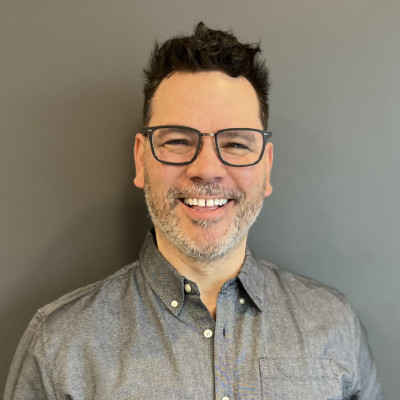
Mathieu Norton-Poulin, M.Ps.
Mathieu Norton-Poulin is a psychologist in private practice in Gatineau, Québec. He graduated from Laval University in 1995 and started his training in transference focused psychotherapy in 2005. Member of the TFP-Québec group he as been practicing as a certified TFP therapist for the last 11 years. Since 2009 he organized several training events and has given lectures on TFP for medical doctors and college students. He maintains a blog where he write, in plain words, articles to explain TFP to the general public.