
Dear fellow members of the ISTFP,
My thought after reading the excellent newsletter that our Public Relations Committee has put together is: “Never Bored!”
Why are we never bored? The articles included in the newsletter remind us of:
- The increasing need for our services.
- The never-ending efforts of our members to meet the need.
- The challenge of sharing our knowledge and skills with colleagues from different parts of the world and from different cultures, and the opportunity to learn from them.
In addition, the newsletter, in its informal poll of what others think of TFP, tells us that we should reflect on some internal representations people outside our community have of TFP… and how to modify those representations when they contain inaccuracies. I found this poll very helpful since it contained information that I have been, to some extent, in denial of (like everyone, I have my defenses).
In Theophilus Kok’s interview with Xumei Wang, we read a first-person account of what may be the most common challenge in learning TFP: the shift from supportive psychodynamic to deep work that offers profound change but that usually requires a period of induction into an exploratory therapy in which the patient, and therapist, must tolerate levels of anxiety as the patient’s earlier maladaptive adjustment to life is questioned.
Xumei Wang’s reflection on her experience also reminds us that what we learn when we learn TFP can help us understand the systems and networks within which we work, and the individuals who compose those networks. This kind of reflection requires the utmost tact since we are seeking an understanding that will help us negotiate challenging situations, with the possible goal of making changes in a system, while having to understand how best to deal with individuals who may be challenging.
Finally, Xumei Wang’s thoughts introduce a topic that we, at the Personality Disorders Institute, have deferred for a long time: should the student of TFP have the opportunity to participate in TFP as a patient? I propose that the ISTFP address this question more directly.
The articles on TFP for adolescents and on applied TFP in this newsletter speak to how members of our Society are expanding the application of our basic model of treatment to help more people in more circumstances. The need for good treatment for adolescents with personality difficulties is reaching crisis proportions and our Society as a whole will do what it can to support our growing initiatives for adolescents.
In the introduction to Mathieu Norton-Poulin’s excellent first article about empirical support for concepts at the heart of TFP, he reminds us of the need for additional RCT’s to add to the evidence base for TFP itself. I can reassure all members of our Society the ISTFP Executive Board is working very actively to initiate more RCT’s on TFP.
Please also take note of the excellent work done by Diana Tellez who has organized the listings of TFP trainings in a very clear and user-friendly way. This way of presenting the trainings will help guide potential students to the training that best suits them. It is a very important development as interest in TFP training continues to grow throughout the world.
A very special announcement before ending my letter is to welcome TFP-Puerto Rico to the ISTFP as a group in formation. TFP-Puerto Rico is an important addition to our community and will provide much-needed help to people on the island. Congratulations to Francisco Ramos-Rivera for taking the initiative to organize this group and to Mónica Eidlin for providing guidance and mentoring.
So, to get back to my initial comment, we all have chosen to devote ourselves to a kind of work in which we will be NEVER BORED! The need for our help presents us with challenges that would be daunting if we faced them alone but, together in this Society, we can turn those challenges into opportunities to work creatively together to advance our skills and understanding.
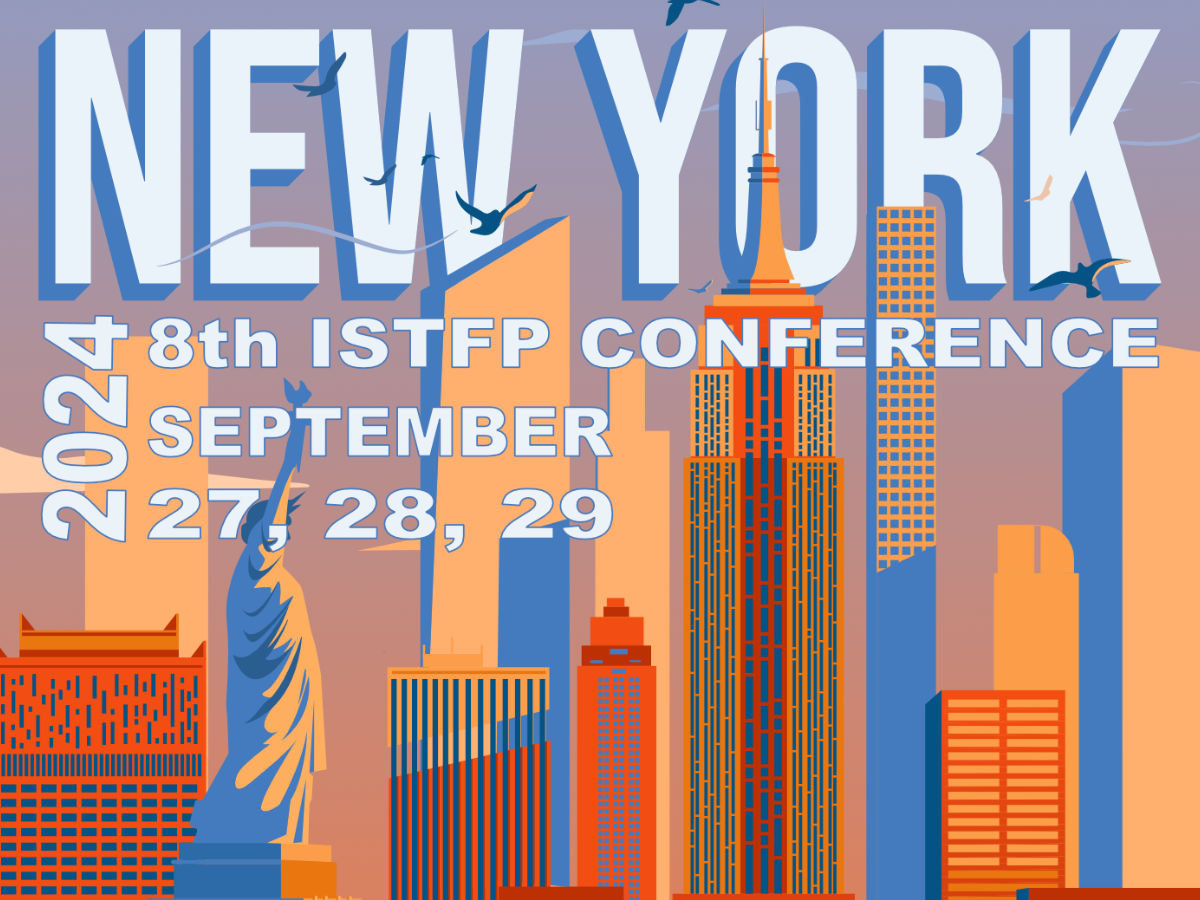
In the spirit of advancing our knowledge, I remind you to please save the date for our next ISTFP Biennial meeting, September 27 to 29, 2024 in New York.
Wishing you some rest and relaxation in the second half or the summer as we prepare to resume our full-speed efforts in September.
With best wishes,
Frank

Frank E. Yeomans, MD, PhD
Frank E. Yeomans, MD, PhD, is a Clinical Professor of Psychiatry at the Joan and Sanford I. Weill Medical College and Graduate School of Medical Sciences of Cornell University. He is a Senior Consultant in and teaches internationally for the Personality Disorders Institute, and is in private practice in White Plains and New York City.