Instituto TFP Hispanoamerica by Grupo TFP Murcia and Grupo TFP Chile
March to December, 2024
Advanced Program in TFP
Spanish – Online
Luis Valenciano, Verónica Steiner, Pepa Gonzalez

ISTFP.ORG
Instituto TFP Hispanoamerica by Grupo TFP Murcia and Grupo TFP Chile
March to December, 2024
Spanish – Online
Luis Valenciano, Verónica Steiner, Pepa Gonzalez
Instituto TFP Hispanoamerica by Grupo TFP Murcia and Grupo TFP Chile
March to December, 2024
Spanish – Online
Luis Valenciano, Verónica Steiner, Pepa Gonzalez
TFP Uruguay
February 23-24, 2024
Friday 23/2 from 13:00-16:00 UY time, Saturday 24/2 from 12:00-15:00 UY time
Spanish – Online (English, depending on the number of participants)
Otto Kernberg
Email your application by following the registration link.
TFP Latinoamerica by TFP Uruguay
2024, April-December
Spanish – Online
Mónica Eidlin, Frank Yeomans, Miguel Angel Gonzáles Torres, Teresa Ribalta, Brenda Tarragona, Juan Pablo Ahumada
Email your application by following the registration link.
TFP-New York
February 3 and 4, 2024
English-Online
Otto Kernberg, John Clarkin, Frank Yeomans, Diana Diamond, Eve Caligor, Lina Normandin, Richard Hersh, Julia Sowislo, Barry Stern
TFP-Switzerland
December 1, 2023
German-On site
Münsterlingen (Switzerland)
Bernhard Grimmer, Daniel Sollberger, Holger Single
Email your application by following the registration link
Instituto Chileno de Trastornos de Personalidad- ICHTP
2024 – 2025
Spanish – Online
Dr. Otto Kernberg, Dr. Luis Valenciano, Ps. Mónica Eidlin, Dr. Miguel Angel Gonzalez, Dr. Benny Oksenberg, and Ps. Valeria Fernández.
Email your application by following the registration link
ÖGATAP
18 Oct 2025
German- In person
Elisabeth Kronawetter, Wolfgang Schnellinger, Bernhard Brömmel
Email your application by following the registration link
ÖGATAP
13 Sept 2025
German- In person
Corinna Wernz
Email your application by following the registration link
ÖGATAP
10 May 2025
German- In person
Petra Holler
Email your application by following the registration link
ÖGATAP
1 March 2025
German- In person
Frank Yeomans
Email your application by following the registration link
ÖGATAP and TFP-AUSTRIA
30 Nov 2024 to 2026
German- In person
Stephan Doering, Kristina Csaky-Pallavicini, Petra Holler, and Bernhard Brömmel
Email your application by following the registration link
ÖGATAP
22 June 2024 to 12 Oct 2024
German- In person
Mathias Lohmer, Andrea Wolek, Bernhard Brömmel, Victor Blüml, and Barbara Koch.
Email your application by following the registration link
ÖGATAP
4 May 2024
German- In person
Otto Kernberg, Bernhard Brömmel, Stephan Doering
Email your application by following the registration link
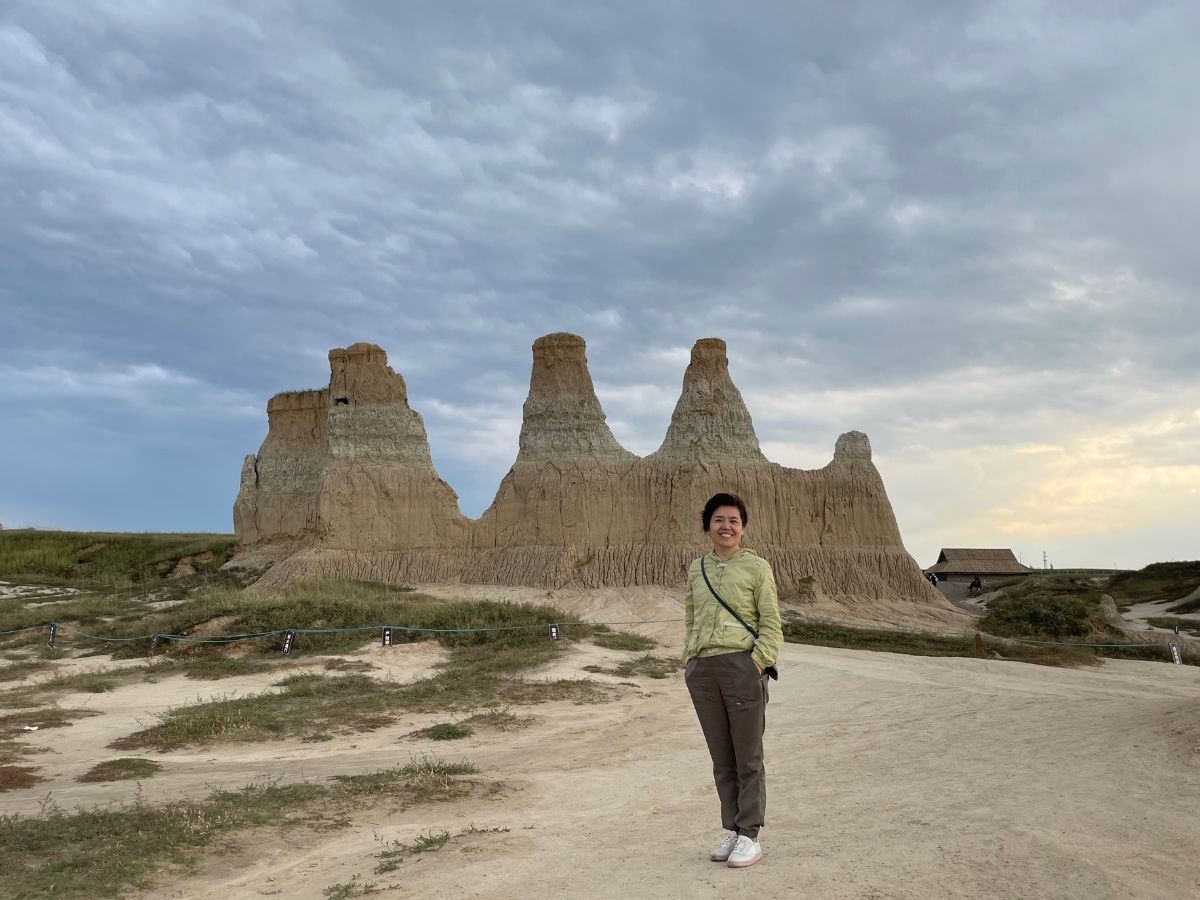
Xumei Wang’s dedicated pursuit of TFP began in 2018, and while she is not presently affiliated with ISTFP, her involvement in its principles remains fervent. As a psychiatrist, she embarked on the study of psychodynamic therapy in 2004, receiving training from distinguished psychoanalysts hailing from countries including Germany, Norway, and the United States. Demonstrating her studious nature, she also attained certifications in music therapy and participated in group relations conferences. Currently serving as the esteemed Director, Professor, and Doctoral Supervisor of the Department of Psychology at Shengjing Hospital, China Medical University, she adeptly guides graduate students in their research endeavors.
In 2015, Xumei Wang had her initial encounter with Otto Kernberg’s work during a workshop at the APA Annual Conference in the United States that she found very illuminating. This encounter proved highly valuable, as her research focus at that time revolved around personality disorders. Collaborating with Dr. Carla Sharp, she worked on introducing the Borderline Characteristics Scale for Children and Adolescents to China. Additionally, her collaboration with Peter Fonagy involved the introduction of the Reflective Functioning Questionnaire for Adolescents to China. Through these collaborations, she gradually familiarized herself with TFP, the therapeutic model developed by Otto Kernberg. In 2017, she deepened her knowledge by attending a TFP workshop led by Otto Kernberg in Hangzhou. A year later, she eagerly enrolled in the inaugural TFP full training program offered in China organized by Theophilus Kok and led by Frank Yeomans.
One of the first things that brought the topic of personality disorders to my attention was a colleague of mine. In 2005, I met a colleague who deliberately caused me a lot of trouble at work, making it impossible for me to do my clinical work and my departmental management for a long time. He knew how to brag about himself and curry favor with the leadership, but his clinical work was unsuccessful. Later, I began to suspect that he might have personality problems, so I read a lot of books and literature about personality disorders and learned about narcissistic personality. I considered that my colleague might have a problem with malignant narcissism. After acquiring this knowledge, I gradually discovered that there are actually many people suffering from personality pathologies, especially narcissistic personalities, both in clinical work and in everyday life.
Because I am a psychiatrist and work in psychodynamic therapy, most of the patients I encounter in my clinical work suffer from personality disorders. And since my hospital is well known in the area, the patients who come to us are more severely ill. Before studying TFP, my training in traditional psychodynamic therapy was mainly more supportive, and I found it difficult to help patients with personality disorders with the techniques I had learned. One of the most impressive times was when a patient in his 50’s came to me for treatment from a long distance and his problems had been going on for many years. After the initial meeting with him to understand his situation, I developed a treatment plan for him and told him to come for treatment regularly in the future. After hearing this, he became furious and began to criticize my work and belittle me. He had hoped that I could cure him in one session, but he found out that I had not solved any of his problems and scolded me. At that time, I felt very shocked and confused, I found myself unable to understand the patient and I didn’t know how I was going to cope with the situation.
Xumei Wang
Receiving TFP training in China is a challenge for a number of reasons. On the practical level, because of the time zone difference, trainees attend classes in the evening, which means they need to use their spare time in the evening to learn TFP after a busy day at work. Since the classes are full of content that can be very different from the trainee’s generally more supportive understanding of psychodynamic psychotherapy, it can be very challenging to fully understand and absorb this knowledge. To overcome this challenge, Xumei would record the lectures and then re-listen and study in her own free time.
After studying TFP, I became more aware of idealization and devaluation, which I knew was a characteristic of narcissistic personalities, and I began to be able to understand such patients and could face the problems and challenges they present. I found that I could empathize with these patients and could work with them more patiently, and I became more composed and confident. Learning TFP has not only helped me in my clinical work, but also in my daily interpersonal relationships. I think this polarization of idealization and devaluation is very common in the social and cultural context of China.
I feel that learning to use TFP has made me feel more competent and empowered, and this is the same in my daily interpersonal interactions. In the Chinese social and cultural context, we like to play the “good old boy”, we suppress aggression and always show support and encouragement. We rarely confront people, and we are afraid that they will feel humiliated by it. This is a kind of mistrust in human relationships. Now that I have learned to confront, I think there are situations where confrontation is useful and can help others change their behavior. I think the theory of TFP provides us with a new perspective so that we don’t stay stuck in dyadic situation; TFP helps us learn to step out of the dyad and interpret our interactions from a third position. I found this very useful.
I think self-therapy is very important. In the past, my analyst has been supportive, and to master the therapeutic approach of exploratory interventions, I think it is crucial to learn through my own experience, and self-therapy is one such approach. I think it is difficult to internalize a therapeutic approach with only didactics or case supervision; I think only personal experience can fully achieve this. I hope that future TFP training programs, in addition to didactic teaching and case conference, should include experiential self-therapy; such an arrangement would give the training program more integrity.
I have now learned to identify and name object relations dyads, but sometimes my understanding of the patient’s psychopathology is still not thorough enough, and I do not manage the timing and depth of interventions well enough. Also, sometimes I worry that my confrontation with patients, especially narcissistic patients, will cause them to drop-out of the treatment. I think Chinese patients with personality disorders may need more support because of the lack of knowledge and stigma in the general population about personality disorders, and it is difficult for these patients to get support from society, which may not be the same as in the United States. So, I think Chinese patients may need a little bit more supportiveness in psychotherapy to build a stable therapeutic relationship, especially in the early stage of treatment, otherwise they may easily drop-out. There may be a cultural difference here that is worth looking into.
Xumei Wang
In the future, Xumei will focus her work on individual therapy for personality disorders and hopes to become certified as a TFP therapist. She also hopes to conduct more research projects related to personality disorders in China and hopes to conduct some collaborative research projects with the ISTFP research team. She is curious about the application of TFP in different social and cultural contexts. She also hopes to have the opportunity to engage in teaching TFP.
In addition, she is interested in research on the adolescent personality disorder population. Her aspirations encompass comprehending the prevalence of this particular group, devising pertinent screening tools, and formulating an efficacious intervention program. She firmly believes in the significance of early detection and intervention for personality disorders.
Theophilus Kok
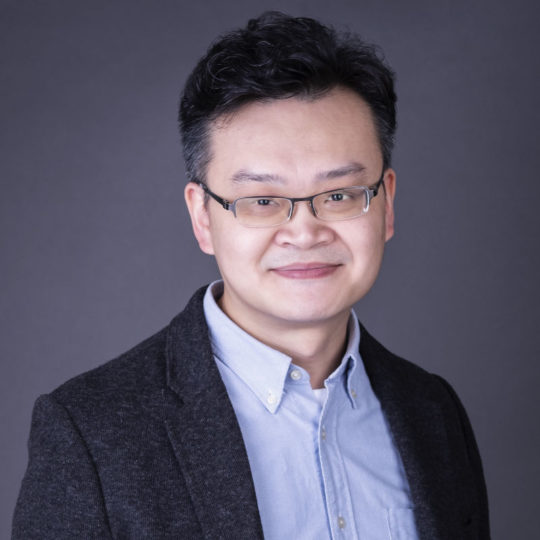
Theophilus Kok is a psychiatrist and psychotherapist in private practice in Hangzhou, China. He graduated from Zhejiang University in 2006 and started his training in TFP in 2018. He is the founder and director of the Institute of Personality Studies and Development, and the leader of the Personality Disorders Working Group in Kangning Hospital affiliated to Wenzhou Medical University. His interest is to treat patients with personality disorders and as the coordinator of TFP training in China, he aims to introduce TFP to more local clinicians.
The Block that IS being used was created in the wrong place, https://istfp.org/wp-admin/post.php?post=9674&action=edit, but can also be edited from within any Posts that Kok has created.
TFP-Austria
September 8 and 9, 2023
German – in person (Vienna)
Otto Kernberg, MD. and colleagues