
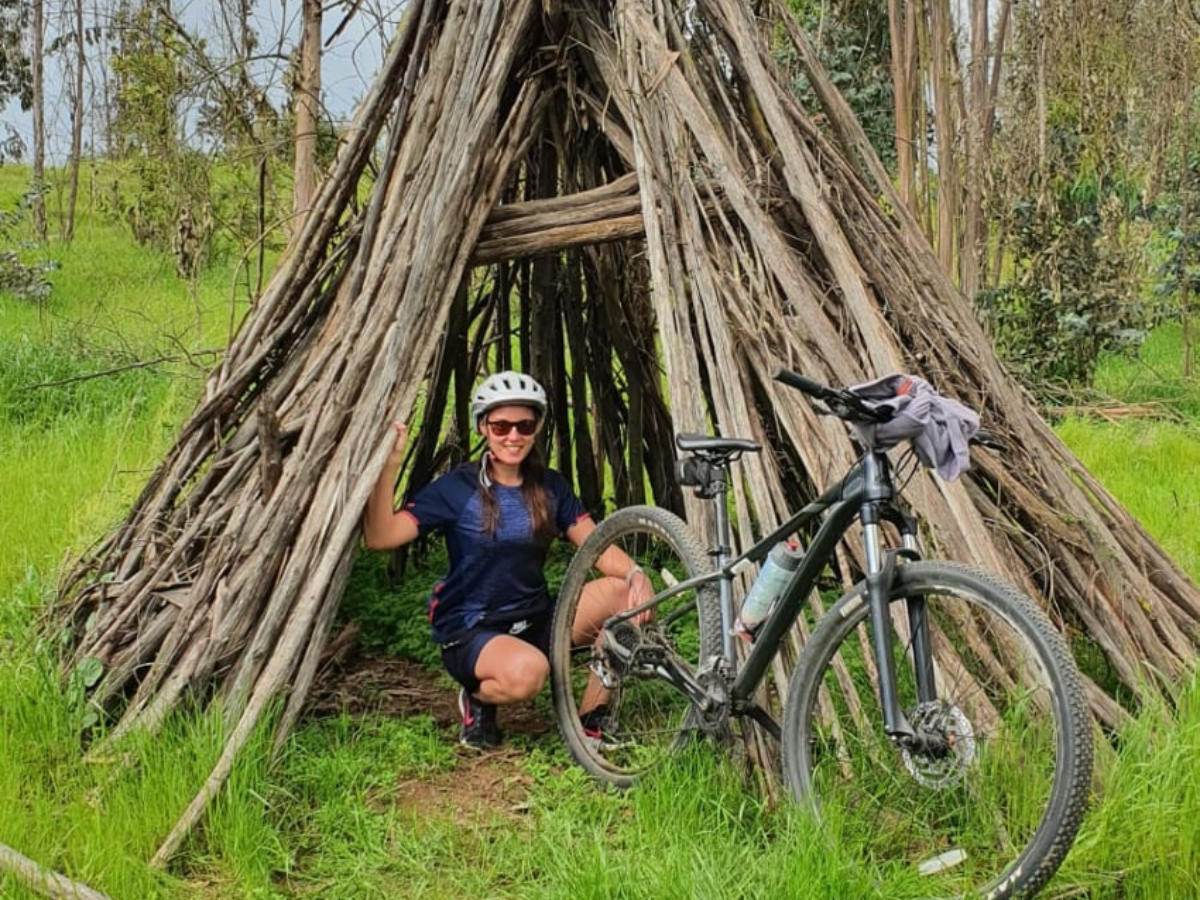
Daniela Saralegui is a young member of the ISTFP since 2020. She is a member of Grupo TFP Chile. She is a clinical psychologist, has a master’s degree in Adolescents from the University of Valencia, and has TFP training from TFP Latin America. Upon meeting her, we discovered an inquisitive girl who was involved in various activities. She is a university professor, attends to patients, and devotes much of her time to research, particularly in the field of TFP supervision.
Her first contact with the structural approach was during her undergraduate training at the university.
I learned Otto’s theory at the university, and from the beginning, it seemed orderly and made sense to me. Although they only taught me the structural theory and nothing about TFP, I came to that a little later. Once I was out of university, I started working at a psychiatric hospital in my country. I had no approach, and I really did not know where to start; it was somewhat chaotic. I thought the appropriate thing was to be eclectic and put a little bit of everything together… so sometimes it was cognitive-behavioral, other times it was psychodynamic, and sometimes I did a third-generation therapy.
It was a mess, and what was impressive was that my supervisor at that time was not concerned, and it bothered me a bit, but not enough. The breaking point came when I had around 20 patients, and one of them was getting worse and worse, going from crisis to crisis, and no matter how much I took the case to supervise, nothing changed.
This led me to a personal crisis, feeling that this was very difficult or not for me… that’s how I came to a supervisor who did TFP, and little by little, the situation became more organized, and so did my internal feelings. I discovered an approach that worked with the type of patient that I was treating. This was my start, and since then, I have trained in various seminars, congresses, and in TFP Latin America, and of course in supervisions, essential to be able to do it well.
Daniela Saralegui
Daniela tells us that this initial “chaos” gave way to a more orderly and structured way of working with clear objectives and easy-to-follow stages. For her, the challenge had not been simple, “being a manualized therapy is a double-edged sword for me. On the one hand, it organizes me, but on the other, I must be careful, given my way of being, I can become a bit rigid, I must always be alert not to lose my spontaneity and closeness, luckily always looking at myself in the session, and in supervision helps me with this.”
This professional start of Daniela marked and fixed her particular interests and challenges. A doubt arose in her about what helped novice therapists like herself. This, coupled with her passion for research, especially qualitative research, embarked on a major project: Investigating Supervision. She is leading the development of a line in this area, focused on researching therapist training, along with Luis Valenciano from Murcia and Verónica Steiner from Chile. “My interest is in conducting empirical research on training, and at the moment, I am starting with supervisions. It is not simple; I would say that this line is divided into three sections.
First, we carried out an exploratory review of what is written in this field; the truth is that quite little, and what there is more from the experiential point of view of the supervisee or from a theoretical point of view. This review examines supervision within the psychoanalytic world. We realized that since the 1980s, different authors have suggested empirical research, but it has remained there, as suggestions
We have decided to take this step and are currently conducting an analysis that will allow us to systematize the dynamics or patterns that occur in a supervision between the supervisee and supervisor. Specifically, we are developing a microanalysis of a supervision session using qualitative methodology and conducting discourse analysis. It has been quite a bit of work, as we are triangulating our analysis with that conducted by research assistants who are working with us. We are also training an artificial intelligence model for emotion recognition, which we hope will contribute to analyzing psychotherapy sessions as well.
Daniela’s project aims to develop a tool that can help therapists better identify and understand the emotions of the supervisee and supervisor during supervision sessions. By collecting and analyzing data from facial expressions, tone of voice, and other nonverbal indicators, the goal was to create an accurate and efficient model of emotion recognition. The objective is that this model can be used to help therapists adapt their interventions to the emotional needs of each supervisee, thus improving therapeutic outcomes.
In addition, Daniela is working on the concept of “intangibles,” which refers to the skills and knowledge that are not easily measurable but are fundamental to the success of supervision in clinical practice. Daniela believed that these “intangibles” are an important part of supervision and are directly related to the quality of care provided to patients. Therefore, she is developing an innovative approach to supervision that includes the evaluation of these “intangibles, ” along with other, more measurable skills and knowledge.
“All of the innovative research I have developed has been driven by my supervisors, Verónica and Luis, with whom we now work in a research laboratory where we jointly develop studies that seek to support our teaching models with empirical evidence.”
Undoubtedly, Daniela’s work is much more than a simple career. She has a passion to help therapists improve the quality of care they provide to their patients, especially in her country, where psychotherapy focused on transfer is still unknown. Daniela hopes to make a real contribution to clinical practice and the training of new therapists, so that they can avoid the mistakes she made when she began as a therapist.
In summary, Daniela is committed to the development of new tools and approaches to improve the clinical practice and training of therapists. Her work on emotion recognition and “intangibles” in supervision is an example of her innovative approach to and dedication to the constant improvement of patient care. Undoubtedly, Daniela is a therapist with a great future, and will be a true leader in her field. Daniela hopes to make a real contribution to Transference Focused Psychotherapy.
I hope that this helps therapists who are starting out, so that hopefully no one goes through the disorder I went through, and I hope that it also helps to spread awareness of this technique in my country, which is still unknown. Although in recent years this has been slowly changing, and more and more people are seeking us out, consulting with us, and wishing to refer patients, however, it is a vicious circle, there are people who are trained, but this is complemented with supervision, and there are few supervisors, meaning we are in a moment of being trapped, I hope this will be resolved so that with more people trained we can begin to develop the technique in other contexts, and who knows, perhaps someday have a presence in the public system of my country.
Daniela Saralegui
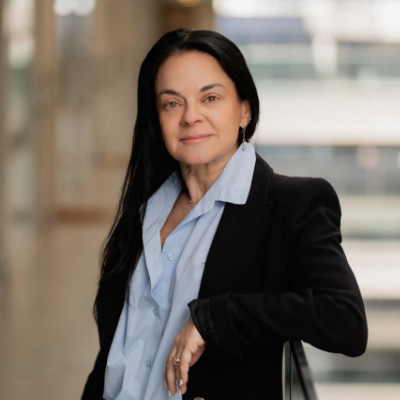
Ps. Veronica Steiner
Veronica Steiner Segal is a Chilean clinical psychologist who graduated in 1998. Since her beginnings she has been working with patients with Severe Personality Disorders in different health institutions in her country, and since 2018 she is a certified TFP therapist. In 2019 she obtained her accreditation as a teacher and supervisor. Since the same year she is coordinator of Grupo TFP Chile. She is the Executive Officer for the Board and she collaborates with the T&E Committee. She also teaches at the University of Valparaiso, in the Department of Psychiatry, where she also teaches in the Diploma of Severe Personality Disorders.
She collaborates in different courses looking for the diffusion of TFP. Together with Luis Valenciano and Pepa Gonzalez she directs an important training in TFP for Spanish speaking students, Instituto TFP Hispanoamerica.