

Dear members, at the advent of 2026, we are launching a new tradition: an annual review of the current landscape of research on TFP. Our goal is to equip all members—therapists and teachers/supervisors alike—with the tools needed to act as informed advocates for the model by providing clear and accessible information about its empirical foundations.
Please note that this review is not intended to be exhaustive. It is designed to be updated annually, incorporating both new and previously published studies that we will gather over time. Given time constraints, this first iteration was necessarily incomplete. We see this not as a limitation, but as a strength, as we hope it will encourage researchers within our community to reach out so that their work can be featured in future editions.
To represent the full scope of the empirical base of TFP, we chose to follow the approach suggested by Kenneth N. Levy, Kevin B. Meehan, and Frank E. Yeomans (2012), considering multiple levels of scientific evidence, including clinical case studies, case series, pre–post designs, and randomized controlled trials. While this represents an ideal standard, we acknowledge that the present review does not yet fully meet it. Nevertheless, it serves as a guiding framework that will continue to shape future editions.

Silvia Bernardi
Silvia Bernardi, MD, is an Assistant Professor of Psychiatry at Columbia University. After graduating from medical school in Florence Italy in 2006, Silvia emigrated to the USA to work intensively in neuroscience research, studying the bases of the interaction between emotions and cognition. Silvia completed her residency in Psychiatry at Columbia and has since practiced privately in New York. She trained in Transference Focused Psychotherapy and continues to see patients for medication management and psychotherapy while conducting her research to unlock further knowledge to support the biological underpinnings of TFP and borderline personality disorder.
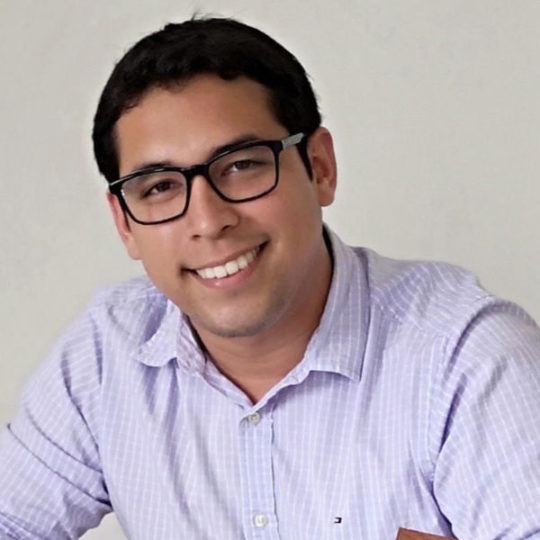
Glauco Valdivieso
Glauco Valdivieso is a Peruvian psychiatrist, psychotherapist, and researcher based in Lima, Peru. He completed his medical degree at the Universidad Nacional Mayor de San Marcos and specialized in psychiatry at the Hospital Nacional Víctor Larco Herrera, becoming a board-certified psychiatrist in 2018.
He is a certified psychotherapist in Transference-Focused Psychotherapy (TFP), trained by the International Society of Transference-Focused Psychotherapy (ISTFP). In addition, he has completed formal training in Cognitive Psychotherapy, Dialectical Behavior Therapy (DBT), and Mentalization-Based Treatment (MBT).
More information
Dr. Valdivieso is the co-founder and medical director of the Instituto Peruano para el Estudio y Abordaje Integral de la Personalidad (IPEP), where he also coordinates the TFP Peru division. He founded and currently leads the Chapter on Personality Disorders within the Peruvian Psychiatric Association (APP), and works at the Mental Health Unit of Hospital de Villa El Salvador in Lima.
He is also a co-founder and editorial board member of the Latin American Journal of Personality, a collaborative initiative with the Instituto Argentino para el Estudio de la Personalidad y sus Trastornos (IAEPD). Additionally, he serves on the editorial board of the Peruvian Journal of Psychiatry. Internationally, he is a Board Member of the International Society for the Study of Personality Disorders (ISSPD), where he chairs the Communications Committee and leads the Latin American Regional Group.
His main clinical and research interests include the treatment of personality and mood disorders, with a particular focus on advancing research in Transference-Focused Psychotherapy (TFP).

Mathieu Norton-Poulin, M.Ps.
Mathieu Norton-Poulin is a psychologist in private practice in Gatineau, Québec. He graduated from Laval University in 1995 and started his training in transference focused psychotherapy in 2005. Member of the TFP-Québec group he as been practicing as a certified TFP therapist for the last 11 years. Since 2009 he organized several training events and has given lectures on TFP for medical doctors and college students. He maintains a blog where he write, in plain words, articles to explain TFP to the general public.