

• Skip to content
ISTFP.ORG

ISTFP.ORG

International Society of Transference-Focused Psychotherapy

Advancing Treatment of Borderline Personality Disorder

  • Home
    • Latest News
    • Upcoming Trainings
    • Books
  • About ISTFP
    • History of ISTFP
    • Executive Board
    • International Groups
    • ISTFP Committees
    • ISTFP Biennial Conferences
    • Contact
  • Treatment
    • About Transference-Focused Psychotherapy (TFP)
    • About Borderline Personality Disorder
    • Research on TFP
    • TFP for Groups
    • Applied TFP for Couples
    • TFP for Adolescents (TFP-A)
    • TFP for Narcissistic Patients
    • TFP for Neurotic Personality Organization (DPHP)
    • TFP in Forensic Psychiatry (TFFP)
    • Inpatient TFP
    • Find a TFP Therapist
  • Publications
    • Transference Focused Psychotherapy Online Library
    • TFP Books
    • Diagnostic Instruments
  • Training
    • Upcoming TFP Trainings
      • TFP Trainings North America
      • TFP Trainings Latino America
      • TFP Trainings Europe
      • TFP Trainings Asia
    • Training in TFP
    • Levels of Certification
      • TFP Therapist Certificates
    • Teacher and Supervisor Curriculum
    • Directory of Certified TFP Teachers and Supervisors
    • Archive of TFP Training Seminars
    • Archive of TFP Training Courses
  • Resources
    • News
    • TFP Podcasts & Video Library
    • Personality Disorder Conferences & Events
  • Membership
    • Join the ISTFP
    • Membership Account
    • Your Profile
    • Member Account FAQ
    • Contributing Content
    • Supervisor Resources
    • Log In

The role of psychodynamically informed therapists in complex socio-political realities

News

In this issue of our newsletter, we focused on the role of psychodynamically informed therapists in current sociopolitical conflicts. That is why we have chosen to review Otto Kernberg’s paper: Malignant Narcissism and Large Group Regression.” Psychoanalytic Quarterly 89(1):1-24, 2020.

This article gains in appropriateness by the minutes, as we see conflicts, natural catastrophes and new regimes come to exist all over the world. In the first section of the manuscript, Dr. Kernberg reviews the major contributions of Freud, Bion, Turquet and Volkan on group psychology, highlighting how, at all different levels of grouping, from individual to large groups, when regression develops and the normal social structure that assures the individual of his status in the society disappears, a search for a “second skin”, a second identity that returns individual security begins. In reviewing these masterful contributions.

Social instability and the defensive behaviours of large groups

Otto depicts how, during threats, groups adopt defensive behaviors similar to the paranoid-schizoid position described by Melanie Klein, splitting, denial, omnipotent control, projective identification. In the headline section of this newsletter, Oleksii references his attention and awareness to these feelings and phenomena as his own population goes through massive destruction during the war (Read the article).

In such conditions of crisis, the search for a leader to provide the large group with a new senses of identification to a new society, becomes critical. Under condition of weakening of traditional social structures, the emergence of extremist political groups and parties with narcissistic and paranoid traits tends to become more likely, given their natural propensity to satisfy the “anxiety” of the mass, left without a strong sense of identity.

Malignant narcissism leadership: a desperate defence of identity

Leadership characterized by malignant narcissism (defined by Dr. Kernberg in 1984 and 2018 as a pathological grandiose self characterized by a sense of superiority, envy, devaluation, chronic emptiness, significant paranoid features, strong, ego-syntonic aggression and antisocial behavior), becomes particularly adept at fulfilling the large group needs for a “second skin” by providing an easy, strong identification with the leader (which in turn, Dr. Kernberg says, spares the need for the mass to envy the leader) and with an ideology that allows to identify the self against the other, aggressively othering a victim minority of choice.

The emergence of this malignant narcissistic leadership through mutual identification with mass crises can lead to devastating consequences. Dr. Kernberg quotes three major examples that led to genocides: Hitler’s Germany attempting to recover from WW1, the economic crisis of Rwanda after decolonization, and the aftermath of the decomposition of the communist system in Yugoslavia. But independent social structures, such as the media, the financial elites, and the armed forces, may have an impact on the regressive processes and set limits to the antisocial behaviors adopted by the leader, for example by not allowing dishonesty.

Preventing large group regression

Given the psychological processes underlying political catastrophes, and given the need for an integrated personality and healthy narcissism to evaluate self and others properly, Dr. Kernberg concludes that psychodynamically-informed therapists can contribute in several ways to the evaluation of political leaders. That should not be done not by labeling leaders with diagnostic names, but by pointing out their nature and the nature of the consequences of their actions and behaviors within complex social realities as divisive, or paranoia-inducing. Inspired by the contribution of historian Snyder (2017 “On Tyranny: twenty lessons from the twentieth century”), Dr. Kernberg writes.

We must remember professional ethics, believe in truth, investigate and listen for dangerous words. [Snyder] explains the importance of establishing a private life, contributing to good causes, learning from peers of other countries. He outlines a profile of individual courage, responsibility independence of thinking and public action. I think these are eminently reasonable and, in fact, essential qualities that permit the individual to stand up to the dangerous imprisonment in regressive group formations and confront dishonest, corrupting and corrupted leadership.

Otto Kernberg, M.D.

Silvia Bernardi and Glauco Valdivieso

Silvia Bernardi

Silvia Bernardi

Silvia Bernardi, MD, is an Assistant Professor of Psychiatry at Columbia University. After graduating from medical school in Florence Italy in 2006, Silvia emigrated to the USA to work intensively in neuroscience research, studying the bases of the interaction between emotions and cognition. Silvia completed her residency in Psychiatry at Columbia and has since practiced privately in New York. She trained in Transference Focused Psychotherapy and continues to see patients for medication management and psychotherapy while conducting her research to unlock further knowledge to support the biological underpinnings of TFP and borderline personality disorder.

Author’s website
Glauco Valdivieso

Glauco Valdivieso

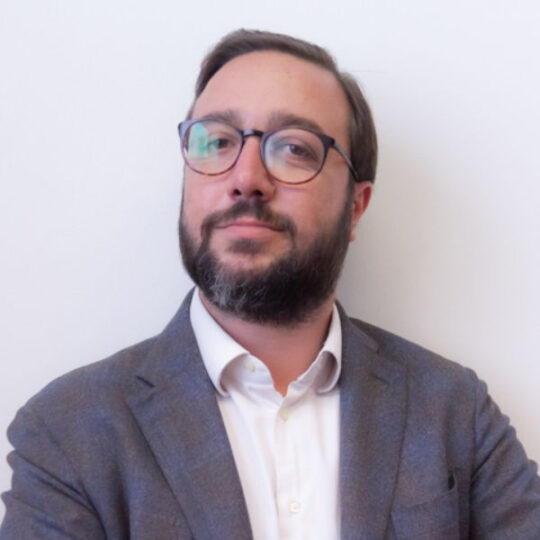
Glauco Valdivieso is a Peruvian psychiatrist, psychotherapist, and researcher based in Lima, Peru. He completed his medical degree at the Universidad Nacional Mayor de San Marcos and specialized in psychiatry at the Hospital Nacional Víctor Larco Herrera, becoming a board-certified psychiatrist in 2018.

He is a certified psychotherapist in Transference-Focused Psychotherapy (TFP), trained by the International Society of Transference-Focused Psychotherapy (ISTFP). In addition, he has completed formal training in Cognitive Psychotherapy, Dialectical Behavior Therapy (DBT), and Mentalization-Based Treatment (MBT).

More information

Dr. Valdivieso is the co-founder and medical director of the Instituto Peruano para el Estudio y Abordaje Integral de la Personalidad (IPEP), where he also coordinates the TFP Peru division. He founded and currently leads the Chapter on Personality Disorders within the Peruvian Psychiatric Association (APP), and works at the Mental Health Unit of Hospital de Villa El Salvador in Lima.

He is also a co-founder and editorial board member of the Latin American Journal of Personality, a collaborative initiative with the Instituto Argentino para el Estudio de la Personalidad y sus Trastornos (IAEPD). Additionally, he serves on the editorial board of the Peruvian Journal of Psychiatry. Internationally, he is a Board Member of the International Society for the Study of Personality Disorders (ISSPD), where he chairs the Communications Committee and leads the Latin American Regional Group.

His main clinical and research interests include the treatment of personality and mood disorders, with a particular focus on advancing research in Transference-Focused Psychotherapy (TFP).

Author’s facebook page

The ISTFP research committee

News

The Research and Publication Committee was established within the ISTFP to promote attention toward research relevant to the field of TFP. John Clarkin has guided the Research Committee since the foundation of the ISTFP. During the past decade, I had the opportunity to assist Dr. Clarkin in the initiatives of the Committee. In particular, we had regular open meetings of the Committee during the biennial ISTFP conferences, and the stimuli from those meetings fostered the initiatives of the Committee. In 2022 I was given the exciting opportunity to chair the Research and Publication Committee and was honored to accept this role. The first task was to establish a group of members. With the precious consultation of John Clarkin and Stephan Doering, a list of highly competent and motivated colleagues emerged:

Marko Biberdzic, Victor Blüml, Anna Buchheim, John Clarkin, Chiara De Panfilis, Rossella Di Pierro, Stephan Doering, Karin Ensink, Eric Fertuck, Andrea Fontana, Susanne Hörz-Sagstetter, Maya Krischer, Maria Jesus Rufat

I could list several qualities when thinking about these esteemed colleagues mentioned above. I want to underline how this roster of members is representative of different sites and countries, different research backgrounds, and different areas of expertise. What all these members have in common, however, is an evident enthusiasm for fostering the empirical basis of object relations and TFP.

During the first inaugural meeting at the last ISTFP conference, the Committee discussed its mission and mid- and long-term goals. We agreed that the Committee would serve as a nexus of communication among clinical researchers in the ISTFP. The initiatives and actions that we are developing aim to stimulate and assist in generating research among members of the ISTFP. Areas of research interest include:

  1. Psychopathology research, primarily as related to object relations theory
  2. Adolescence and developmental research
  3. Research on clinical assessment, e.g., STIPO-R, IPO-A, LPOq
  4. TFP process and outcome research

After the inaugural meeting, the Committee has scheduled a periodic follow-up meeting to translate the ideal mission into practical operations. In particular, we identified some initiatives as priorities for our joint work:

  1. Generation of a general research plan for conducting randomized clinical trials (RCT) of TFP.
    We all know how crucial it is to continue accumulating empirical evidence on the efficacy of TFP. New RCTs are paramount to continue being on the map of Evidence-Based Treatments for personality disorders. At the same time, such research efforts are hard to implement and pursue. Thus the Research Committee is supporting sites undergoing such efforts.
  2. Consultation with potential sites for the conduction of RCTs of TFP.
    Along the same line, as some RCT plans are almost ready to start, we need to prepare new sites for (near) future efforts.
  3. Mapping research expertise within the ISTFP
    The ISTFP community is unique in how clinical, theoretical, and research experiences are shared among many valuable members. We will soon circulate a brief survey for those members of ISTFP who are involved in research. We aim to get a clear map of such diffused expertise to create and foster collaboration networks.
  4. Reviewing empirical evidence on TFP and the object relations model of personality pathology.
    The TFP model is unique compared to other treatment models in that therapeutic techniques derive from a specific well developed clinical and theoretical model of the mind. We thus think that, besides RCTs, we can foster the empirical foundations of TFP, stimulating research in other areas. In particular, we came up with some research areas, and we are now in the process of reviewing existing contributions in the following domains:
    • Developmental research and adolescence
    • Assessment
    • Social cognitive processes and neurobiological underpinnings
    • Psychotherapy research (outcome, process, mediators/moderators)

We have set an exciting and challenging roadmap, and we look forward to conducting this journey!

 Emanuele Preti

 Emanuele Preti, Ph.D.

Emanuele Preti, PhD is an Associate Professor of Clinical Psychology in the Department of Psychology at the University of Milano-Bicocca in Milan, Italy, where he teaches and conducts research on personality pathology, clinical assessment, and psychotherapy. He serves on the Executive Committee of the International Society of Transference-Focused Psychotherapy and is a Fellow of the European Society of Personality Disorders. Preti also contributes to several international editorial boards and collaborates on research projects exploring dimensional models of personality disorders and related social-cognitive processes.

Research gate profile

The Penn State graduate program in Clinical Psychology

Courses, North America

TFP Pennsylvania

certified hours

December 1, 2023

The Penn State graduate program in Clinical Psychology

English – Online
Application deadline December 1, 2023

INFORMATION | REGISTRATION

[Read more…] about The Penn State graduate program in Clinical Psychology

Transference-Focused Psychotherapy: Complete Didactic Training

Courses, Europe

TFP Group Ukraine

66 certified hours

September 15, 2023

Transference-Focused Psychotherapy: Complete Didactic Training

English (Ukrainian translation) – Online
Training 2023-2024
Frank Yeomans, M.D., Ph.D.
Email your application by following the registration link

INFORMATION | REGISTRATION

[Read more…] about Transference-Focused Psychotherapy: Complete Didactic Training

Transference Focused Psychotherapy for Adolescents

Latin America, Seminars

TFP Group Bilbao – Murcia

12 certified hours

May 19 and 20, 2023

Transference Focused Psychotherapy for Adolescents

Spanish – Online
Álvaro Esguevillas,
Pepa González Molina,
Miguel Ángel González Torres,
Luis Valenciano
Email your application by following the registration link

INFORMATION | REGISTRATION

[Read more…] about Transference Focused Psychotherapy for Adolescents

Advanced Phase 1: Strategy and Tactics

Europe, Seminars

TFP- Institut Nord (TIN)

12 certified hours

June  16 and 17, 2023

Advanced Phase 1: Strategy and Tactics

German- In person (Hamburg)
Prof. P. Martius,
Email your application by following the registration link

INFORMATION | REGISTRATION

[Read more…] about Advanced Phase 1: Strategy and Tactics

Video-based certification: review, evaluation and feedback

Europe, Seminars

TFP- Institut Nord (TIN)

12 certified hours

March 8 and 9, 2024

Video-based certification: review, evaluation and feedback

German- In person (Hamburg)
Prof. S. Doering, Dr. B. Dulz
Email your application by following the registration link

INFORMATION | REGISTRATION

[Read more…] about Video-based certification: review, evaluation and feedback

Advanced Phase 2: Group Therapy

Europe, Seminars

TFP- Institut Nord (TIN)

12 certified hours

October 6 and 7, 2023

Advanced Phase 2: Group Therapy

German- In person (Hamburg)
Dr. M. Lohmer, Dr. B. Dulz
Email your application by following the registration link

INFORMATION | REGISTRATION

[Read more…] about Advanced Phase 2: Group Therapy

Curriculum 2023-2025 Transference Focused Psychotherapy: Psychotherapy for the treatment of personality disorders

Courses, Europe

TFP Institute Munich

certified hours

October 20 and 21, 2023

Curriculum 2023-2025 Transference Focused Psychotherapy: Psychotherapy for the treatment of personality disorders

German- In person (Munich)
Prof. Dr. med. Peter Buchheimand
Dipl.-Psych. Brigitte Blanke and colleagues

INFORMATION | REGISTRATION

[Read more…] about Curriculum 2023-2025 Transference Focused Psychotherapy: Psychotherapy for the treatment of personality disorders

Managing BPD in a General Psychiatry Setting: Key Clinical Contributions from TFP

Africa, Seminars

Academic departments of psychiatry in South Africa

5 certified hours

May 10 and 17th, 2023

Managing BPD in a General Psychiatry Setting: Key Clinical Contributions from TFP

English – Onsite (Academic departments of psychiatry in South Africa)
Dr. Tennyson Lee, Dr. Craig Bracken, Chaired by Prof Henk Temming

INFORMATION | REGISTRATION

[Read more…] about Managing BPD in a General Psychiatry Setting: Key Clinical Contributions from TFP

Third ESSPD Summer School 2023: Personality Disorders: Developmental Pathways and Intervention

Courses, Europe

European Society for the Study of Personality Disorders – ESSPD

certified hours

August 27th to September 2nd, 2023

Third ESSPD Summer School 2023: Personality Disorders: Developmental Pathways and Intervention

French – In person (Crêt-Bérard, VD, Switzerland)
Application deadline February 1st, 2023

INFORMATION | REGISTRATION

[Read more…] about Third ESSPD Summer School 2023: Personality Disorders: Developmental Pathways and Intervention

The ISTFP mailing list project

News

Dear ISTFP members,

The 7th ISTFP conference ended just over two months ago, and I am still reflecting on how stimulating it was, both intellectually and emotionally. Like me, those of you who attended were able to witness our strong sense of community that prevails despite the challenges to group cohesion wonderfully described during the conference by Miguel Angel Gonzalez Torres.

Our sense of community strengthens each of us in numerous ways, so it is important that we nurture this sense of community on an ongoing basis. One way to accomplish this is to enhance our ability to share different skills and resources.

To formalize this ability to share and communicate, the ISTFP’s Public Relations and Communications Committee is creating a complimentary service that will be provided to all TFP groups. We call this service “The ISTFP Mailing List Project”. This will be especially relevant to those of you who plan lectures, trainings, and other academic events.

What is a mailing list?

This article contains exclusive content for ISTFP members.

If you already are a member of the ISTFP, login to read the full text. If you are not a current member of the ISTFP and want to enjoy all of our exclusive content such as blog posts and other resources, please click one of the links below and follow the instructions provided. We look forward to welcoming you to our community.


Renew Now or Join the ISTFP
Already a member? Log in here

Mathieu Norton-Poulin, M.Ps.

Mathieu Norton-Poulin is a psychologist in private practice in Gatineau, Québec. He graduated from Laval University in 1995 and started his training in transference focused psychotherapy in 2005. Member of the TFP-Québec group he as been practicing has a certified TFP therapist for the last 9 years. Since 2009 he organized several training events and has given lectures on TFP for medical doctors and college students. He maintains a blog where he write, in plain words, articles to explain TFP to the general public.

READ THE AUTHOR’S BLOG

Third ESSPD Summer School 2023: Developmental Pathways and Interventions

News

Third ESSPD Summer School 2023 – August 27th to September 2nd, 2023

Dear colleagues and ISTFP members,

The European Society for the Study of Personality Disorders (ESSPD) is proud to announce the third ESSPD Summer School for early career researchers, organized in collaboration with the University of Lausanne, Depart- ment of Psychiatry, Institute of Psychotherapy and Child and Adolescent Psychiatry Service, with the financial support of the Swiss National Science Foundation (SNSF).

The aim of the summer school is to increase the meth- odological competencies in conducting high quality de- velopmental psychopathology research in the domain of personality disorders. Topics include: developmental psy- chopathology (i.e., prediction of self-harm and suicide in adolescence), inclusion of family in research designs (i.e., mothers with personality disorders and their offspring), prospective long-term follow-up studies, psychotherapy, research designs (i.e., effectiveness, mediation, modera- tion), assessment of emotional processing, socio-cognitive processing and reflective functioning in adolescence.

We will adopt a theory-integrative, disorder-oriented and evidence-based approach. Throughout the one-week pro- gram, the focus will be on the plurality of methods, their productive use for specific research questions and their creative combinations in order to deepen the understand- ing of developmental pathways and the effects of pre- vention and intervention to personality disorders in youth.

Teaching methodologies include interactive presentations, workshop exercises on actual research material, plenary and small group discussions, individual work, speed-talk presentations, playfully structured question-and-answer sessions.

Where?

The summer school takes place in a relaxing and inspiring atmosphere at the picturesque retreat center Crêt-Bérard, calmly perching over Lac Léman in Switzerland, one of the largest lakes in Western Europe. Activities as part of a social program will be organized.

When ?

Sunday, August 27th 2023 (arrival day) – Saturday, September 2nd, 2023 (departure day); 5 full days residential).

For whom ?

PhD students, MDs, or early post-doctoral fellows affiliated with a European university.
Deadline : Applications by February 1st, 2023 by e-mail to [email protected].

All applications must contain a letter of motivation, a curriculum vitae and a 1-page summary of the relevant research project (in one PDF file). Applications from Eastern Europe are explicitly encouraged.

Full fee EUR 750 (includes registration to all scientific ac- tivities, six overnight stays at Crêt-Bérard, all meals/coffee breaks, and organized social activities).

Reduced fee EUR 300 for participants from Eastern Euro- pean countries (includes registration to all scientific ac- tivities, six overnight stays at Crêt-Bérard, all meals and organized social activities).

Important: ESSPD, with funding from SNSF, fully supports financially up to five participants from Eastern European countries (will be paid for: reduced fee and travel expens- es). Please attach one letter of support (e.g. from your supervisor) if you are interested to apply for this funding.

Flyer of the event (PDF)

ESSPD
ESSPD

The European Society for the Study of Personality Disorders (ESSPD)

ESSPD website

Workshop STIPO-R

Latin America, North America, Seminars

December 10 and 11, 2022 – Online
Spanish – Online
TFP Group Mexico
Twelve sessions of two hours each time

For more information click here
Register [email protected]

Basic course in TFP

Courses, Latin America, North America

January  21, 2023 – Online

Spanish – Online
TFP Group Mexico
Twelve sessions of two hours each time

For more information click here
Register [email protected]

TFP applied to Narcissistic Personality Disorder

Courses, Latin America, North America

January  21, 2023 – Online
Spanish – Online
TFP Group Mexico
Twelve sessions of two hours each time

For more information click here
Register [email protected]

Master talk: Conceptualization of Personality Disorders

Seminars

January  27-28, 2023 – Online

Spanish
Instructor: Dr. Otto Kernberg
Four sessions at two hours each time
TFP Uruguay

For more information click here
Register or [email protected]

The 7th Berlin Forum Transference Focused Psychotherapy – TFP and Addiction

Europe, Seminars

TFP Institute Berlin

certified hours

November 18, 2023

The 7th Berlin Forum Transference Focused Psychotherapy – TFP and Addiction

German- In person (Berlin)
Stefan Anft, Iris Baisch,Marion Braun and colleagues
Email your application by following the registration link

INFORMATION | REGISTRATION

[Read more…] about The 7th Berlin Forum Transference Focused Psychotherapy – TFP and Addiction

TFP Didactic Training Graduate

Courses, Europe

TFP Institute Italy – PDLab

certified hours

Every year

TFP Didactic Training Graduate

Italian- Hybrid
20 hours of supervision will be required

INFORMATION | REGISTRATION

[Read more…] about TFP Didactic Training Graduate

Training in Transference Focused Psychotherapy (TFP)

Courses

November  11 and 12, 2022

Spanish – Online

Two days session a month for six months

TFP Institute Bilbao – Fundación OMIE – Fundación Vasca

For more information click here

Register [email protected]

  • « Go to Previous Page
  • Page 1
  • Interim pages omitted …
  • Page 5
  • Page 6
  • Page 7
  • Page 8
  • Go to Next Page »
  • Home
  • Contact
  • Privacy

© 2012–2026 ISTFP · All Rights Reserved · Website Design and Maintenance by MadRiverWeb.com · Contact ISTFP Webmaster